What is
LAMA2 Muscular Dystrophy
A rare congenital genetic disorder affecting the muscles and nervous system
LAMA2 Muscular Dystrophy (LAMA2 CMD), also known as merosin-deficient congenital muscular dystrophy type 1A (MDC1A), is a rare genetic disorder that typically manifests from birth or within the first months of life. It is caused by mutations in the LAMA2 gene, which carries the instructions for producing the protein laminin-211 (merosin) — vital for the integrity of muscle fibers.
Laminin-211 (merosin) is a protein that forms the basement membrane — the thin sheath surrounding each muscle fiber. It connects the muscle cell to its surrounding tissue and ensures its stability. When the LAMA2 gene carries a mutation, the production of laminin-211 is disrupted or completely halted, making muscle fibers fragile and prone to damage.
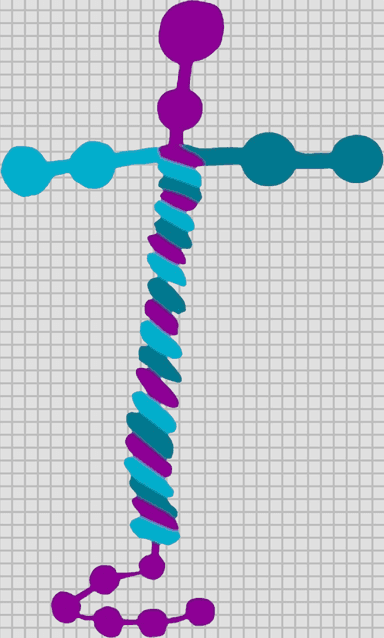
Laminin-211
Important to know
Symptoms and challenges
Muscle weakness
Low muscle tone (hypotonia) from birth, affecting movement and posture
Joint contractures
Joint stiffness (elbows, knees, ankles) that limits range of motion
Breathing difficulties
Weakness of the respiratory muscles, which may require nighttime breathing support
Delayed motor development
Delayed or inability to reach motor milestones such as independent sitting or walking
Genetics
How it is inherited
LAMA2 muscular dystrophy is most commonly inherited in an autosomal recessive pattern — the child receives a mutated copy of the gene from each parent. In rare cases, spontaneous mutations can also occur without a family history of the condition.
Parents are usually healthy carriers — they have no symptoms themselves, but each carries one mutated copy of the LAMA2 gene. When both parents are carriers, there is a 25% (1 in 4) chance with each pregnancy that the child will be affected.
Care
Daily life with LAMA2
Although there is no cure yet, proper supportive care significantly improves quality of life:
Physiotherapy
Regular exercises to maintain muscle function, prevent contractures, and improve mobility
Respiratory support
Respiratory physiotherapy, monitoring of lung function, and non-invasive ventilation when needed
Speech therapy and feeding
Support for speech development and overcoming difficulties with eating and swallowing
Orthopedic care
Orthoses and assistive devices, monitoring of joint deformities and spinal curvature
Hope
Scientific research
There is currently no approved treatment for LAMA2 muscular dystrophy, but scientists around the world are actively working on several promising approaches:
- Gene therapy – introducing a working copy of the gene into muscle cells, or activating compensatory genes, to restore laminin production
- Protein therapy – delivering laminin directly to muscle fibers to compensate for the missing protein
- Gene editing – using CRISPR technology to correct the mutation directly in the LAMA2 gene
LAMA2 Bulgaria Foundation follows the progress of these research efforts and works to raise awareness about the condition.
Progress
Therapies in development
Specific projects and programs that scientists are currently working on:
MDL-101 (Modalis)
CRISPR therapy that activates the LAMA1 gene in muscles to compensate for the missing LAMA2. Granted Rare Pediatric Disease and Orphan Drug designations by the FDA.
↗LAMA1 activation (Kemaladewi)
An alternative approach to activating LAMA1 using CRISPRa technology, developed at the University of Pittsburgh.
↗Linker proteins (αLNNd + mini-agrin)
Gene therapy with two replacement proteins that restore the connection between muscle fibers and the extracellular matrix.
↗Stem cells (GYM)
A European stem cell therapy project using the patient's own muscle stem cells. Currently in clinical trial phase.
↗Learn more
Useful resources
International organizations working for children with LAMA2:
Have questions?
Contact
We'd be happy to answer your questions about LAMA2
You can contact us using the form below, by email contact@lama2.bg or on facebook
For a stronger tomorrow
Your donation supports families and scientific research toward a therapy.
or by bank transfer to our donation account
Thank you from the heart!